Why Did God Have To Die?

Part of the new #snaphots series – short contributions to big questions
“So, why did God have to die?” This question, asked by many, runs to the heart of the Christian faith.
Had To? Chose To.
One of the most well known Bible verses starts this way, “For God so loved the world …” (John 3:16).
Love is a choice. It has to be. Coerced love is no love at all. You could spend years of your life studying robotics and then creating the perfect machine to meet your every need, but you wouldn’t have created something to love you, rather it would exist to serve you.
Other religions – not to mention a few cults – detest the idea of God dying. The idea of the most holy God suffering and dying as a human is repulsive to them because it brings shame on their God. God would have to be less than God if he suffered a human death.
Yes, I would agree, if God were not a God of love. But what greater act of love could someone perform than willingly exchanging their life for yours? If love were of immense value, surely the greatest person (God) would be capable of the greatest act of it? (More on that in a moment).
To Pay The Price
The problem of sin runs deep. The Bible speaks of Jesus coming to pay the price for our sins to offer us forgiveness. But why, it may be asked, did not God just ‘click his fingers’ and be done with sin? Why choose to live and die as a human to pay for our sin?
Seems like an easy out, but it would cheapen the character of God to someone not worthy of worship.
The things that are most valuable are the things that people steal (like the recent Cannes diamond theft – it was diamonds, not sand, that was taken). The perfect love of God is of immense value, and when it is stolen from – through sin – the cost of forgiveness is immensely high. Perfect love requires real, costly, forgiveness.
Tim Keller uses this example in his book, Reason For God.
“Imagine that someone borrows your car, and as he backs it out of the driveway he strikes a gate, knocking it down along with part of a wall. Your property insurance doesn’t cover the gate and garden wall. What can you do? There are essentially two options. The first is to demand that he pay for the damages. The second is to refuse to let him pay anything. There may also be a middle-of-the-road solution in which you both share they payment. Notice that in either option the cost of the damages must be borne by someone. Either you or he absorbs the cost for the deed, but the debt does not somehow vanish into thin air.”
If God were to choose to forget, rather than forgive, then there would be no price to pay, rending the love of God cheap in the first place. If the French police turned around and said, “Ahh, they’re just diamonds – no big deal”, there’d be an outcry. You pay high for a theft of great value and the payment for sin is death. The love of God sent Jesus to the cross to bring us our forgiveness. In love he created us and in love he redeemed us.
To Show Us His Love
What is the most loving thing you could conceive of? The greatest loving act imaginable?
The philosopher Alvin Plantinga thought about this and in the end came to the conclusion that the cross of Christ is the best loving act not only that has happened, but also that could ever happen.
If God exists, and is all loving, and we are in sin, then the greatest act would be to make his existence known to us, reveal that he loves us, and redeem us from sin.
In Jesus’ incarnation – coming to earth as a man – and atonement – dying to forgive us – we have the greatest possible act of love conceivable.
Just pause for a moment. If Jesus really was God, and Jesus really did die for you to forgive you, forget all the other objections you may have for a moment – if that were true, what would you say to Jesus if you met him? What would you feel, and what would you think about him?
The evidence for resurrection of Jesus is compelling. There are hard things to wrap our minds around and we continue to think about them. But if Christ rose from the dead then that changes everything. That would reveal the act of a perfect, loving, just God who forgives and redeems.
Further Reading
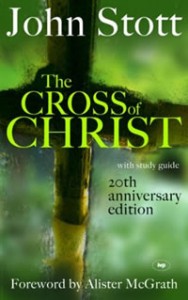
- The Cross of Christ by John Stott – perhaps the best book written on the cross.
- Reason for God by Tim Keller – particularly chapter 12, The (True) Story of the Cross.

God sent His Only Begotten Son to die so that mankind would not have to.
*Chose To?*
I find the argument that God chose to die in order to show his love to be very peculiar.
I am a parent, and I love my children. There is no question that if the need arose I would die to protect them. I think that is a fairly universal view amongst parents.
What I wouldn’t do is die unnecessarily in an ill-conceived attempt to demonstrate my ‘love.’ I rather think there are better ways to show I love them rather than killing myself in order to satisfy some criteria of my own investion.
God didn’t need to die in order for our sins to be forgiven by him (otherwise he isn’t God as there must be a higher power preventing him) so choosing to do so is a weird parenting choice.
I rather think that if my children were naughty and so I arranged to have myself killed before I forgave them, and then got my partner to remind them of my needless self-sacrifice, occasioned only by my own unwillingness to forgive them without dying first, that it’d be rather emotionally damaging for them – in a way that my dying in the act of saving them from something beyond my control such as a runaway train or whatever might not.
I simply fail to see how killing yourself because you’ve made up a rule that you can’t forgive the people you love for doing things you knew they would do (because you’re omniscient) is “loving” in any way. It just seems a bit pointless.
As you have used some analogies, I feel able to do the same.
Imagine I left my children in a room with not much to do, with a box labelled ‘Toys and Games’ and told them that I was going out for the day, and that they were not to leave the room or open the box.
I think there would be a number of legitimate questions about my parenting you could ask:
1) If you don’t want the kids to open the box, why leave it in the room while you go out? It seems like it’s asking for trouble.
2) If you love your kids, why have you placed temptation in their way?
3) What on earth do you think will happen?
There is a direct parallel to be drawn here with God putting the tree of knowledge in the garden of Eden. What was he thinking?
To continue the analogy further, how would you describe my parenting if, as a result of my children opening the box, I required them to give me a percentage of whatever they earned for the rest of their lives, as God required animal sacrifices? And then I required the same of my grandchildren, as God did with Cain and Abel? And their children and their children and so on – all because my kids opened a box way back when? In fact God went further than requiring all subsequent generations to offer him sacrifices, he punished them physically too. Childbirth is painful for all women, we are told, because of what Eve did. Work is hard because of what Adam did. It’s hard to make an analogy for that level of peevishness because people aren’t omnipotent, but I guess the nearest I can get is watching my children, grand-children and so on suffer poverty and hunger but failing to help them and still requiring their payments even though I was a multi-millionaire.
Now pause to consider that Christians describe the being behaving in this way as “love”and reflect that perhaps that is a strange word to use when, if we mortals behaved the same way, it’s the very last word we’d use.
Now imagine further that I decided that the only way I could forgive the children I loved for opening the box of toys, and their children and their children and so on for the heinous crime of being born after my children opened the toy box, was to kill myself, would you then describe me as anything like the ultimate expression of love? Or at best an eccentric and at worst a controlling, selfish, self-serving, egotistical bully? And do you imagine my family would mourn my death and remember me fondly?
God creating a situation in which it was inevitable Adam and Eve would sin.
He didn’t forgive them, even though he could (or he isn’t God)
He carried over that sin to all subsequent generations who had to make sacrifices and suffer pain for the actions of others
He then made up a rule that he would only forgive if he killed himself.
How is that loving?
*To Pay The Price*
The ‘price’ argument doesn’t make sense either.
A price is the mutually agreed value two parties place on an item. For example, if I make a widget in my shed, I may value it at £1,000. However, if the most anyone else values it is £500 the price is not set – the potential customers and I have to negotiate, and we may, for example, end up with a price of £600 if I can convince them that the widget is better than they thought it was when they valued it at £500. Or £400 if they convinced me that was the best offer I’d get.
The point is that with only one party, there is no price – it has to be set by negotiation.
By talking about ‘a price’ having to be paid, you are positing a scenario in which someone is offering God the ability to forgive sins and that the price that God and the other party negotiate (the value they both agree on) is that God dies for a bit.
Obviously there are two problems with this – firstly it implies that God doesn’t natively have the power to forgive sins, which is not compatible with being omnipotent and rather begs the question as to why all those cows, bulls and chickens had to be slaughtered – and secondly it requires someone else to have ‘the power to forgive sins’ to ‘sell’ to God.
The fact that an agreed value or ‘price’ requires two parties is made clear by the example from ‘Reason for God’ The ‘diamonds’ example does, too. There is nothing intrinsically valuable about diamonds, they attract a high price because there aren’t that many of them and quite a lot of people want them because the ‘good’ ones looks pretty and the others are quite good for cutting stuff.If diamonds weren’t so pretty, were very common and were useless for cutting we’d call them ‘coal’ and the price would be so low we could afford to burn it for heat. It’s all just carbon but the price requires at least two people to establish it.
So who is the person to whom God has to pay the price of his own death before sins can be forigiven? Or is there no other person, and God is just making up rules for himself which require him to die so he can show how much he loves us in a rather bizzare, unconvential and entirely unconvincing manner?
Thanks for your comment Tom. I appreciate your thoughts and will endeavour to continue the discussion where and when possible.
Of course, my post was addressing a large subject and aiming to provide a mere ‘snapshot’ of a much broader set of answers. With that in mind you have made some interesting points that I wish to engage with.
At one point you said:
“God didn’t need to die in order for our sins to be forgiven by him (otherwise he isn’t God as there must be a higher power preventing him).”
On the one hand I would agree. God didn’t need to die, but someone did, namely us. If God were forced, or coerced, to die that would mean that God was indeed held to a higher power, and that in turn would mean he wouldn’t be God.
When Adam and Eve sinned, by disobeying God they made a choice that had the necessary consequence of separation. It was this consequence, this punishment, that God chose to take upon himself, taking the fall for them and us.
Furthermore, God knew that this was going to happen before he created humanity. Rather than this being an “ill-conceived” plan it shows the depths of God’s love.
God being perfect cannot tolerate imperfection. God being loving created us with free will (the makings of a different blog post, I think) so that we can freely choose to love him back. With that free will came a real alternative and we chose the poorer option, the disobedience that we chose took us away from God – through the imperfection of sin – and the only way back was for God to not terminate us but take the penalty of sin for us.
At the cross the love of God was indeed demonstrated, but it wasn’t only a demonstration, it was an exchange of our plight for his.
You also said:
“I simply fail to see how killing yourself because you’ve made up a rule that you can’t forgive the people you love for doing things you knew they would do (because you’re omniscient) is “loving” in any way. It just seems a bit pointless.”
There are two components at work here: forgiveness and justice. Instead of there being a rule of God that he can’t forgive us unless he dies, we chose the separation for ourselves by choosing to sin. God wants to forgive us but the sin exists. How are we to get rid of that?
If a judge were to stand in court and pass sentence on a criminal and order him to twenty years prison, pause, and then say, ‘Never mind, I forgive you, go free’ – wouldn’t we think that decision unjust? Likewise if something is stolen – and perhaps sin can be likened to stealing from, or at least defacing, perfection – there is now a debt in play. Forgiveness may be extended but restitution is also required. At the cross we were forgiven, restored, and our ‘debt’ paid for us. We were both pardoned for the crime and at the same time set free from paying back the crime.
If God did not pay the ‘debt’ that came about by our sin, we would be under the weight of it, unable to pay it ourselves, and so would remain condemned by our inability to pay it back.
Again, thank you for you comment. Happy to continue the discussion. Also happy to revisit particular areas afresh in other posts if we do venture into other areas.
Hi Jonathan
Thank you for finding the time to reply.
You state in your reply that Adam and Eve “made a choice that had the necessary consequence of separation. It was this consequence, this punishment, that God chose to take upon himself, taking the fall for them and us.”
I don’t understand this. I understand that you believe Adam and Eve disobeyed God (although I also understand that you believe he knew that they would and put the tree of knowledge there anyway. I’d say that’s like leaving a drug addict alone with a full syringe and then being angry with them for taking the drugs – just don’t leave the obvious temptation lying about would be the obvoous thing to do?)
Anyway, I digress. Why does God hold me to accout for something my very distant ancestors did? How is that compatible with him being loving? I find it hard to understand how a loving ‘Father’ couldnt forgive his children anyway, but it’s utterly incomprehensible to me how a loving ‘Father’ could hold generations for evermore to account for the actions of their ancestors.
You go on to say “God didn’t need to die, but someone did, namely us. ”
Why? Why did God need someone to die? What is it about killing people or deities that makes the sin ok again? I don’t understand why any death was necessary. Why couldn’t God just say “I’m disappointed in you Adam and Eve, but becuase I love you I forgive you” without the death? He did punish us – work is hard (for everyone, for ever) and childbirth is painful because of what Adam and Eve did. Why was there death too?
Furthermore, “God knew that this was going to happen before he created humanity.” seems to contradict
“God being perfect cannot tolerate imperfection.”
If he cannot tolerate imperfection, why did he create it?
“and the only way back was for God to not terminate us but take the penalty of sin for us.”
Who set the “penalty of sin” at “someone has to die”?
Hi Tom,
I think your first two points are well put and because they are essentially topics in themselves (‘Why did God leave the humans alone with tree?’ and ‘What happened at the Fall’, or something like that) I suggest we branch these out in future posts. I propose we take the problem of the tree first. There are two of us that contribute to the Demolition Squad blog on Fridays. I’m not up until Fri 20th, if you’re OK, let’s branch out then (no pun intended).
Further, I have some ideas about how we can go back and forth better, which may include guest posts from yourself, if you’d like, from time to time. If this is something you’d like to discuss I’ll send you an email and we can work something out.
Now, on the issue of death and sin, firstly I think that all Christians would say that there is some element of mystery involved here. If God is bigger than us, and sin is too much of a problem for us on our own, then we should expect that we wouldn’t be able to traverse the width of the problem with our minds. That being said, Christians would also say that there is much we can say of the problem, rationally, logically, and coherently.
There are some areas that baffle me, some areas that really make think, some ideas that on the face of it are hard to swallow.
These areas however don’t comprise the majority of my understanding of God and therefore I can hold them, warts and all, in a sort of tension. My faith in God can remain strong with a few problems. This doesn’t mean that I will ignore the challenges, the conundrums etc., or make light of them. So again, let me say, I really appreciate your good thoughts in these tricky areas!
To get to the (third) point, when Adam and Eve sinned (because of free will choice), as the first people, the perfection of Creation was marred. We were therefore separated, imperfect (us) opposed to perfect (God). God as well as being perfect, is also patient, so we weren’t extinguished immediately. Decay from imperfection, leading to death, was now set in to things.
God created us for relationship with himself that we might exist to know love. God did this in spite of knowing what was going to happen, but because that relationship is of great value, the redemptive plan was put in place (Christ’s death).
When Christ died the Bible describes that we, still in sin, still imperfect, can now be reconciled to perfection. That when we accept faith in Jesus, God sees perfection ‘on us’. The Bible describes Jesus’ blood as covering us (admittedly, not a nice idea in our ‘civilised’ society today) and that our sin was covered by Christ.
So we as humans still suffer the effects of sin, death, but death only of the physical. The spiritual has been renewed, through faith in Christ, and will one day be made perfect again after death.
Now I didn’t come up with that idea on my own and I don’t think I would have the imaginative mind to do it either! What I have done is look at the evidence of the resurrection of Jesus and concluded that it is more probable than improbable that it happened. If that’s the case then all of a sudden I take that event very seriously and what that means.
If you like, it’s a sort of ‘working back’ from the cross. If Jesus was real (nearly everyone agrees this) and Jesus really died and came back to life (strong evidence for this that many people have acknowledged for 2000 or so years) then that changes everything.
The mystery of evil, and the fall, can be understood in part through my reason and in part through the lens of the revelation through the Bible. Of course, my reason is fallible, I make mistakes sometimes, but Christians hold the Bible as authoritative (another post! – we’ve looked at some of this in other posts ‘It’s In The Details’ is one).
If the Bible is a sham then my faith is a sham, and we should all go home and think of something else.
Thanks again for the comment. Looking forward to continuing the discussion.
Good morning Jonathan. Thanks for replying.
I look forward to the “Why did God leave the tree there, with full knowledge of what the outcome would be?” post. I will try to keep an open mind, but if I’m honest I’m expecting some linguistic gymnastics and a few unsupported assumptions leading to the inevitable conclusion that God was right to do it, even though that one single preventable action led to all the misery in the world which He apparently wished to be perfect. May I be so bold to suggest that you could test any explanation by substituting a human parent and their twin 2 year olds for ‘God’ and ‘Adam and Eve’ to see if it is morally sound?
I’m more than happy to guest blog – that sounds like a good idea.
I’m not sure of your claim that “sin is too much of a problem for us on our own” to be honest. You don’t have to look far to find examples of mere mortal humans who forgive people despite them committing the most heinous crimes. I don’t then understand why God was unable to do the same without somebody or something being killed. It’s the death=forgiveness link I’m struggling with. Once I’ve got that perhaps I can work on death by proxy = forgiveness? I’d have thought that was a fairly big part of your religion, not some minor part you can “hold in tension”? Given that God will throw me to eternal suffering because I don’t believe in him anyway, even though he loves me, all the death seems a bit pointless. (And I still think it unfair that Thomas got to spend time with the actual Jesus and still doubted so was given more physical evidence, whereas God seems to expect me to believe with no evidence whatsoever. I find that unjust and harsh.)
Your explanation of why Adam and Eve messed it up for everyone, rather than just themselves seems to imply that a) knowledge is sinful and b) knowledge is genetically passed on. I see little evidence of the latter; certainly none of my children have been born able to walk and talk, let alone pass exams. I also don’t know what is inherently sinful about knowledge.
You then go on to say that “God created us for relationship with himself that we might exist to know love.” Is that from the bible? I can’t find it anywhere. This comment also seem to suggest that you do not believe an atheist can “know love” – whatever that means. Do you think an atheist incapable of loving, or of being loved, or both, or neither? (And if the answer is neither, how does that fit with your assertion that it is through a relationship with God that we know love?)
I’m not sure how your statement that “God did this [created us] in spite of knowing what was going to happen [Adam and Eve would mess everything up for evermore]” fits with his creation being perfect. If something is described as perfect, I would expect it not to have an in-built flaw that will cause problems almost immediately. Is that not your understanding of perfection?
You then go on to say that “because that relationship is of great value, the redemptive plan was put in place (Christ’s death).
” If that is the case – that God made something that he thought was perfect even though he also knew it would almost immediately go wrong because of the tree he didn’t have to put in the garden but decided to leave there anyway, why did he then wait 4,000 years (or whatever it was) before putting the redemptive plan into action? That doesn’t suggest he thought the realtionship was of great value to me, to be honest, and it seems desperately unfair to all the people who lived and died in that time. Especially to the ones God killed or arranged to be killed.
I wonder if when you say “we as humans still suffer the effects of sin” you have any explanation why the populations of some countries seem to suffer it so much more than others. Or, to put it bluntly, why does God hate poor people so much?
I’m not convinced by your “working back” from the disputed assumption that Jesus was “real”, especially as you offer no evidence to support it. I’m not even sure that you are correct to say that most people agree that Jesus was real, and even if you are it’s hardly a basis for an argument. A lot of people believe that you lose most of your body heat through your head, that Marie Antoinette said “Let them eat cake” and that Jesus was born on December 25th. That doesn’t make them true. I’d be interested in seeing the “strong evidence” that Jesus died and came back to life that you mention. It evidently wasn’t strong enough for Thomas at the time though, and he’d met Jesus.
Your statement that “If the Bible is a sham then my faith is a sham, and we should all go home and think of something else.
” goes further than perhaps I would. You are as free as anyone to believe what you want, but your belief no more makes it true than my lack of belief makes it false. It’s true of false independently of belief. Personally I have followed that thought process, though and concluded that the bible isn’t much of a book, and that a describes, at best, a not-very-nice God.
You appear to concede that it is necessary for one to consider the evidence in order to form a view as to whether or not God is “real” and I can see none that inclines me to think that there is a benevolent, loving God presiding over us. None at all. I’d be interested to hear what you think I’ve missed.
So many points! Thanks for your reply.
Firstly – on the passing down of a condition, there is much evidence of this in genetics! Sin is a condition, not just a ‘knowledge’ and I think it’s conceivable to say that it could be very much passed down through generations.
Secondly – on having parts of my faith in ‘tension’. I understand that there are big areas that I don’t have all the answers too. That doesn’t mean that I don’t have good reasons for large parts of these problems. Acknowledging that I don’t understand, may not understand, every area, rather than making that whole area a complete mess and a huge stumbling block for faith, simply describes the limits of my understanding, something that I can and do live with. This is of course not an excuse for the Christian – or anyone for that matter – to not continue to examine his/her life, as Socrates would have us do.
Thirdly – I haven’t given evidence for the resurrection here but would be very happy to. We have looked at this elsewhere on the blog before (search on ‘Easter’). There is much written on this, of course, elsewhere.
Fourthly – on the reliability of the Bible. If Christians were to lose the authority of the Bible because it became clear that it was made up/altered/inaccurate etc. then we lose the historic account of Jesus. I would submit that this makes for large problems for the Christian. The Apostle Paul made it clear when he said that if Christ were not raised, faith is in vain. The Bible is our primary source for the resurrection. We believe it in our hearts of course, and Christians profess this belief, but it is built on the witness of others. No Christian alive today witnessed the death and resurrection of Jesus. Does that mean it’s not true? Of course not. As with all history we establish the accounts of the past, examining the trust-worthiness of them.
Fifthly – I think there are many good reasons to believe in a ‘benevolent, loving God’. I’m sorry that you have seen no evidence at all for this. I really am. This, in part, is what this blog is all about. Giving good reasons.
Finally, I do appreciate your continued interactions Tom. I appreciate your detailed thoughtfulness. Thank you.
A month after my post, and a fortnight after you said you’d reply (http://www.cvm.org.uk/blog/demolition-squad/look-around-you-atheism-or-christianity/#disqus_thread) and still no reply 🙁
Hi Tom – have replied (see below). Will keep an eye out for responses.
Pingback: Abraham and Isaac - Why, God? | The CVM Blog