Author Archives: Jonathan Sherwin
Clear Minds and Dirty Feet – from Jon Morrison

Clear Minds and Dirty Feet is available to buy from Amazon
I want to introduce you to a useful book. It’s written by a good friend of mine. Jon Morrison is Canadian, slightly cheeky, sharp-minded and very easy to get on with because he’s mastered the art of not taking himself very seriously.
Jon and I studied together for a period and he’s since returned to his beloved native Canada where he works for Apologetics Canada.
A Book For All Of Us
One of the things I remember about Jon from our time in the classroom together was his quest to understand and communicate the big picture and his love for cartoons. Both of these skills he has woven into the book. Written as an introduction to the reasonableness of the Christian faith it is effective as a commendation of faith to those who don’t believe. It is also a great tool – and I suspect this where it will prove most useful – for Christians looking to understand further the reasons for the hope that we have been given (1 Peter 3:15).
In a clear, straightforward manner, Jon tackles many big and tricky questions of the Christian faith, along the way introducing the reader to many of the authorities on these matters, both present-day and from the depths of history. One of the delights of the book is how Jon offers glimpses of much deep thought in many areas through the voices of many great writers, philosophers, theologians, and historians. They serve as a signpost to various rabbit holes, where readers are invited to explore further if they so wish.
This is, as Jon writes, a book of “Christian philosophy that could be read by people who are not philosophers.”
Clear Minds and Dirty Feet is a book of, “Christian philosophy that could be read by people who are not philosophers.”
If you are someone who is looking to learn a little more of Christian apologetics and are wondering where to start, this book is a great place to dive off from. Once you have read it, underlined it, used it as a reference, you may well find yourself buying another copy to pass to a friend.
What’s Included
The book surveys much of the evidences for the Christian faith starting with the ‘conflict’ between science and faith. Jon then offers contemporary arguments for the existence of God including the Fine Tuning Argument, a look at the Big Bang, and an argument from morality.
The book deals with much of the high-quality philosophy done in these areas before getting to the heart of the matter, that is, Jesus.
As an “historical religion” Christianity is based on the person of Jesus, rooted in the claims of the Bible. Jon examines these claims and the goes on to look at the resurrection, miracles, and tackles the thorny issues many would want to leave alone, the doctrine of hell and the problem of evil.
Jon’s pastor’s heart and desire to communicate the overriding message that Jesus has been raised from the dead comes shining through. The Bible says that, “If Christ has not been raised … your faith is in vain. (1 Cor. 15:14)” By looking at the evidence for the life of Jesus, what Jesus accomplished, and that we can know this today, Jon places the heart of the Christian message at the heart of his book. The fruits of philosophy, history, and theology point to a greater truth revealed in the person of Jesus Christ.
Jon’s pastors heart and desire to communicate the overriding message that Jesus has been raised from the dead comes shining through.
With many good reasons to believe in Jesus Christ and a deeper understanding of the incredible hope for the world, the Christian who learns something of apologetics is equipped to answers questions asked of him. This hope that we have come to know and love compels us go and tell others. This is why clear minds really do lead to dirty feet.
Dr. Craig Hazen has called this book “delightful” and “full of interesting, cutting-edge content”. I quite agree. Jon has done what many find very hard to do, that is, take tricky, complex ideas, and present them in an easy-to-digest format. I’ve learnt from this book and I have no doubts you will do too.
About Jon Morrison
Jon Morrison is associate Director of Apologetics Canada and adjunct faculty member of Pacific Life Bible College. He blogs at jonmorrison.ca and you can follow him on Twitter.
Why Did God Have To Die?

Part of the new #snaphots series – short contributions to big questions
“So, why did God have to die?” This question, asked by many, runs to the heart of the Christian faith.
Had To? Chose To.
One of the most well known Bible verses starts this way, “For God so loved the world …” (John 3:16).
Love is a choice. It has to be. Coerced love is no love at all. You could spend years of your life studying robotics and then creating the perfect machine to meet your every need, but you wouldn’t have created something to love you, rather it would exist to serve you.
Other religions – not to mention a few cults – detest the idea of God dying. The idea of the most holy God suffering and dying as a human is repulsive to them because it brings shame on their God. God would have to be less than God if he suffered a human death.
Yes, I would agree, if God were not a God of love. But what greater act of love could someone perform than willingly exchanging their life for yours? If love were of immense value, surely the greatest person (God) would be capable of the greatest act of it? (More on that in a moment).
To Pay The Price
The problem of sin runs deep. The Bible speaks of Jesus coming to pay the price for our sins to offer us forgiveness. But why, it may be asked, did not God just ‘click his fingers’ and be done with sin? Why choose to live and die as a human to pay for our sin?
Seems like an easy out, but it would cheapen the character of God to someone not worthy of worship.
The things that are most valuable are the things that people steal (like the recent Cannes diamond theft – it was diamonds, not sand, that was taken). The perfect love of God is of immense value, and when it is stolen from – through sin – the cost of forgiveness is immensely high. Perfect love requires real, costly, forgiveness.
Tim Keller uses this example in his book, Reason For God.
“Imagine that someone borrows your car, and as he backs it out of the driveway he strikes a gate, knocking it down along with part of a wall. Your property insurance doesn’t cover the gate and garden wall. What can you do? There are essentially two options. The first is to demand that he pay for the damages. The second is to refuse to let him pay anything. There may also be a middle-of-the-road solution in which you both share they payment. Notice that in either option the cost of the damages must be borne by someone. Either you or he absorbs the cost for the deed, but the debt does not somehow vanish into thin air.”
If God were to choose to forget, rather than forgive, then there would be no price to pay, rending the love of God cheap in the first place. If the French police turned around and said, “Ahh, they’re just diamonds – no big deal”, there’d be an outcry. You pay high for a theft of great value and the payment for sin is death. The love of God sent Jesus to the cross to bring us our forgiveness. In love he created us and in love he redeemed us.
To Show Us His Love
What is the most loving thing you could conceive of? The greatest loving act imaginable?
The philosopher Alvin Plantinga thought about this and in the end came to the conclusion that the cross of Christ is the best loving act not only that has happened, but also that could ever happen.
If God exists, and is all loving, and we are in sin, then the greatest act would be to make his existence known to us, reveal that he loves us, and redeem us from sin.
In Jesus’ incarnation – coming to earth as a man – and atonement – dying to forgive us – we have the greatest possible act of love conceivable.
Just pause for a moment. If Jesus really was God, and Jesus really did die for you to forgive you, forget all the other objections you may have for a moment – if that were true, what would you say to Jesus if you met him? What would you feel, and what would you think about him?
The evidence for resurrection of Jesus is compelling. There are hard things to wrap our minds around and we continue to think about them. But if Christ rose from the dead then that changes everything. That would reveal the act of a perfect, loving, just God who forgives and redeems.
Further Reading
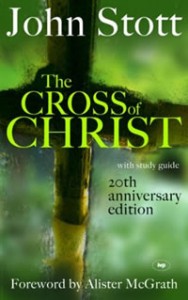
- The Cross of Christ by John Stott – perhaps the best book written on the cross.
- Reason for God by Tim Keller – particularly chapter 12, The (True) Story of the Cross.
Beer Mat Apologetics: Five Principles of Sharing our Faith
We’ve all been there. The conversation is flowing, everyone is engaging, and things are moving along, well, nicely.
But then a question threatens to derail the conversation or stop things dead in their tracks. When sharing our faith with our friends, our colleagues, or our family, it’s helpful to have a few things in mind to keep the conversation on the rails and avoid the traps. Here are some top tips for defeating the defeaters to help you to share your faith more effectively.
 1. Answer The Question
It may seem obvious, but when a question is asked, we should do our best to address it directly.
Yes, there may be a question behind the question etc. but taking the time to answer the question being asked shows consideration for the questioner and a willingness to engage with the topic on the table.
This may mean doing some research, reading a few books, and involve us saying, “I don’t know, but let me do some research and get back to you.”
Many people see a huge credibility gap within Christianity. Let’s make sure we’re doing our part to present the case for our hope (1 Peter 3:15) in a straightforward and clear manner, treating the question – and by association the questioner – with the respect they deserve.
 2. Recycle The Argument
The philosopher A. C. Grayling would have us believe the many people believe in God for psychological reasons, that belief in God is akin to believing in fairies.
We’ve looked at this argument before on this blog and have seen that this can be argued both ways. That is, people may believe in God for psychological reasons or likewise they may not believe in God for psychological reasons.
This argument may appear at first glance to pose a problem, but when we examine it, we realise that the very same argument may be employed to defeat the objection.
Recycling: good for the planet, good for the apologist.
 3. Ask The Question: ‘Who’s asking?’
You may have heard the Indian story of the blind men and the elephant. The story depicts a room with an elephant in it and some blind men. These men can feel a certain part of the elephant and from that the try to describe to each other what they feel.
One man has a leg and thinks he has a pillar. One has the side and is convinced it’s a wall. Another has the tail and believes it to be a rope. Yet another has the ear and mistakes it for a fan, and, finally, another man things the tusk is a stone.
This illustration may be used someone in attempt to demonstrate that the many faiths/truth claims of the world are like this room with the elephant and the men. We are told that we each have a grasp on some aspect of the truth, but we are only feeling a part of the truth. In this view, Christianity may be, perhaps, the ear, but it’s not the whole thing.
But wait just a minute. We haven’t been told the whole story. We have left one person out of the account, namely the narrator. For this story to be retold we must have an observer who can see the whole picture! And if the narrator possesses the whole truth then what is the story really saying?
 4. Applicable To All
William Lane Craig has said that the problem of pain and suffering is,“undoubtedly the greatest intellectual obstacle to belief in God.”
This particular questions poses a great challenge (and I believe a great opportunity) for the Christian. It’s a problem to be wrestled with, thought much of, and answered slowly and carefully.
But it’s also a question that every worldview must answer. The challenge is not unique to the Christian but common to everyone, everywhere. It’s not so much of a guided missile aimed at our camp as an asteroid headed for the planet.
Christianity has good answers to offer to everyone who ponder this question and when seen in this light we can move towards commending Christianity to our friends, and away from just defending it. Reframing the question leads us to talk about the benefits of the answers and gets us towards Jesus.
 5. Point To Jesus
Talking of Jesus … There may be times that you feel that the conversation is getting away from you. That the carefully crafted route that you hold in your mind is not going exactly to plan. Thoughts have fallen into a hole and are continuing to burrow with greater speed than repressed men in need of beer.
It’s at times like these that it’s good to remember why we’re even in conversation in the first place. Put simply, it’s all about Jesus. We can talk/discuss/argue about philosophical/historical/theological points and these are good. But the goal of all of these is to clear the way to talk about Jesus.
The Apostle Paul said that, “if Christ has not been raised, then our preaching is vain, your faith also is vain.” (1 Cor. 15:14) If Jesus really lived, really died, and was really raised to life, then that’s a game changer.
Meeting Jesus was the changing point of our lives. In our efforts to proclaim His name let’s make sure we’re talking about him a whole lot.
These notes are from the talk ‘Beer Mat Apologetics’. Drop the Demolition Squad a line if you would like us to speak at one of your events.
Belief in God: It's Just Wishful Thinking
“You only believe in God because you want someone to be there. You want your life to have meaning and purpose, you want the comfort of knowing someone is in control of it all. In short, your faith is simply a psychological crutch.”
Have you come across some form of this argument? This common objection against faith in God seeks to argue that many people only believe because they want to believe. That is, they do not believe on grounds of good reason. Belief in God, the argument goes, typically occurs as a result of experiencing pain, or worry, or heartache – something negative – to which the person responds by choosing to believe in God to make things better.
This person is described as projecting a view of God, in much the same way, perhaps, that a child believes that good fairies are protecting them whilst they sleep from all the nasty goblins and things under the bed. It is a belief that one believes to be true in order to feel better.
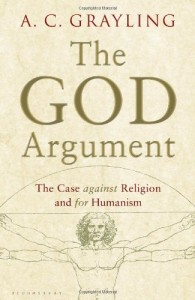
The God Argument by A. C. Grayling
I was at a recent talk in Oxford listening to A. C. Grayling, the celebrated philosopher and one of the so-called New Atheists, whose recent book The God Argument seeks to counter faith in religion with an optimistic view of humanism.
One of the more heavily pushed arguments from Grayling that evening was this one of ‘wish fulfilment’. Grayling actually likened the argument for the existence of God as akin to an argument for fairies at the end of the garden (a topic Sarah Abbey deals with well here).
What Does This Argument Really Prove?
Grayling was offering this argument in support of the idea that there is no God. But wait just a minute. What is the argument actually saying? It may be laid out like this:
- Many people believe in God for psychological reasons
- These psychological reasons aren’t reasonable
- Without good reasons for God it’s unreasonable to say that God exists
- Therefore God doesn’t exist
However there is a huge jump from premise two to premise three! Since when did how anyone believe in anything amount to any sort of evidence for/against that very thing?!
Let me liken it to this: I might believe that airplanes are carried magically across the sky by hoards of tiny invisible bats, contrary to all the laws of lift and thrust etc. I would be completely unreasonable in my belief structure but that doesn’t mean that airplanes don’t exist!
It’s entirely possible to do the sums wrong and end up with the right answer.
For and Against
Additionally, this same argument may be used against the non-believer. Could we not say that non-belief in God could just be wish-fulfilment also? That is, that you don’t want someone to be there, someone to say what is right and what is wrong, someone that might interfere with you life? You don’t want there to be a higher power so you believe and live in such a way that say there isn’t?
The fact of the matter is that how someone believes in God does not speak to the reasonableness of the existence of God. There are many reasonable cases to be made for God, including the evidence for the Resurrection, the detailed eyewitness accounts of Jesus, the argument from morality, and the historical case for Jesus to name but a few that we have covered.
Dismissing the existence of God because of how some choose to believe in God does not make for a compelling case, and further more scuttles itself by the very fact that this argument is not reasonable.
What about you? Have you come across this sort of argument? If so, do you find that there is merit to it or not? What has your response been to those who employ this argument? Leave us a comment below.
The Demolition Squad is heading to The Gathering! Check out our seminar on Saturday afternoon and come and say Hi. We’d love to meet you!
It's All About Winning
There was something very satisfactory about watching the Lions blow away the Barbarians in Hong Kong in 2013. It was an encouraging start to the forthcoming tour of Australia and provoked a few headaches both for the Lions selectors as well as Aussie defence coaches, who ultimately failed to cope with the threats the boys from home brought down under.
The victory settled the nerves and ensured that we got off on the right foot. Serving up relief, optimism, and belief – but perhaps above all just a great feeling that we’ve won.
And men do love to win. And we love to want to win. We get inspired by great speeches – from the pages of history to the writers of Hollywood. Think of “We shall never surrender” or “Inch by inch.” These great pieces of oratorical genius get the blood flowing and focus our attention.
Celebrate Victory
I wonder, however, if too often we concede too much to ultimately insignificant battles. Victory in the rugby is a great Saturday lunchtime – but what if that’s it? What if I spend my design on a fleeting sporting event thousands of miles away played by people I don’t actually know?
And we are designed for passion. We are wired for emotional engagement to connect with things that matter and shape our energies towards achieving victories.
But as with so many areas of our lives we can all too easily form the wrong attachments and let our emotions leads us astray away from what is right. The answer to this is not to shut down our emotions and emphasise stoicism (just look where that grand national experiment got us) but reattach our emotions and our passions to the good and the true.
This starts by celebrating Jesus. When we marvel at his victory over sin and death – our enemies – we begin to reorient what we get passionate about. When we really believe that He has changed things forever, that He has won, we live with optimistic enthusiasm and this ‘hope’ begins to wash over every area of our life.
We are made to win. We are made to get excited about victory. So don’t limit your passion to things that will ultimately fade away.
Cultivate Humility
When I engage with my non-Christian friends, or debate with atheists, I am in a high-stakes battle. Of course it’s a battle. When people’s eternal destiny is on the line it’s not a verbal game of Laser Quest.
Jesus was a fighter. He fought a battle and won. His motivating example inspires me to be a good ambassador for Him.
However, my motivation is not to win for victories sake – or it shouldn’t be – but to introduce people to the winner, to Jesus. We may be wired to celebrate victory but in our enthusiasm and through our emotions let’s not forget whom this victory belongs too.
“This is what the Lord says: “Let not the wise boast of their wisdom or the strong boast of their strength or the rich boast of their riches, but let the one who boasts boast about this: that they have the understanding to know me, that I am the Lord, who exercises kindness, justice and righteousness on earth, for in these I delight,” declares the Lord.” (Jeremiah 9:23–24)
I will celebrate my Lord’s victory. I will let my whole self passionately rejoice that Jesus has won and that he shares His victory with all. And I will marvel that in all of His wisdom he chose me, and he chose you, to tell others about Himself.
Of course, any celebration of victory brings a strong danger of arrogance. There is no place for this in the work of the evangelist. When I stand next to Jesus I am utterly defeated. I am undone. No warrior in this world could ever hold his gaze. I am violently aware of how utterly inadequate I am.
God is not creating perfect people with perfect answers and all-convincing personalities to advance the knowledge of his victory. No, He’s using you and me. The power is not in our persuasion but victory that Christ achieved and we celebrate, as Paul reminds us, “we have this treasure in jars of clay to show that this all-surpassing power is from God and not from us.” (2 Corinthians 4:7)
Useful Apologetics Resources: Books
In our last blog we wrote about great online web resources for apologetics. This week we’re looking at some must-read books. These are all widely available and are listed in no particular order. Do you have a favourite book that we haven’t listed? Let us know about it, leave us a comment.
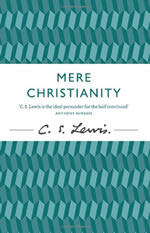 Mere Christianity
C. S. Lewis
C. S. Lewis was invited by the RAF to visit various bases during WWII to deliver talks to the crews of Bomber Command. Lewis, a top intellectual at Oxford University, had to change his delivery for the average guy who was manning a machine gun in the tail of a Lancaster.
This book builds on BBC Radio talks and those RAF visits to capture the essence of the Christian faith, what Lewis termed ‘mere’ Christianity. Lewis was a champion of the imagination and his creative energies in this book mark it as a compelling commendation for faith in Jesus and a brilliant introduction to Lewis.
Buy this book on Amazon.co.uk
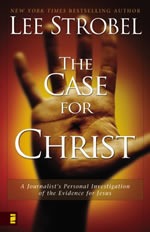 The Case for Christ
Lee Strobel
Lee Strobel was a top-notch reporter for the Chicago Tribune. Used to dealing in facts and getting to the heart of the matter Strobel was challenged to investigate Christianity. When he applied his journalistic skills to this challenge he was amazed at the overwhelming evidence for Jesus Christ.
Also check out The Case For Faith – applying the same rigorous investigation of the tough objections to the Christian faith.
Buy this book on Amazon.co.uk
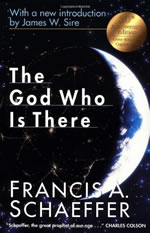 The God Who Is There
Francis Schaeffer
Francis Schaeffer was an American who lived in Switzerland and talked to hippies.
He left his mark on evangelism by stressing just how much we need to really love people. To love someone is to understand them. This wasn’t apologetics simply to answer questions but apologetics, listening to the questioner intently, based on a deep respect for people who don’t know Jesus.
Schaeffer took people seriously and spent a lot of time seeking to really learn what the questions being asked were. The God Who Is There get’s into this and more as to bring both understanding and compassion, as Schaffer said:
There is nothing more ugly than a Christian orthodoxy without understanding or compassion.
Buy this book on Amazon.co.uk
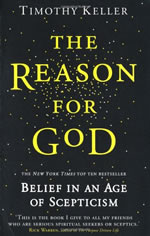 The Reason For God
Tim Keller
Popular New York pastor Tim Keller brings the conversation right up-to-date with his bestselling book The Reason For God. Based on years of experience dealing with challenges to the Christian faith from many areas, Keller deftly answers tough questions in fresh ways.
This is a book you’ll want to keep a couple of copies of to give away to friends.
Buy this book Amazon.co.uk
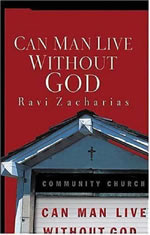 Can Man Live Without God?
Ravi Zacharias
Like all of the above authors, Ravi Zacharias has written many books. Can Man Live Without God, a best-seller, asks a the reverse of a popular question common today. Christians are faced with defending their faith to their friends, colleagues, family, neighbours etc. but what about other views? Does the person who doesn’t have faith have answers to give? What is the alternative and is it plausible?
Zacharias takes a good look at why Jesus makes sense and why people who don’t believe in him have many answers to give for their position.
Buy this book on Amazon.co.uk
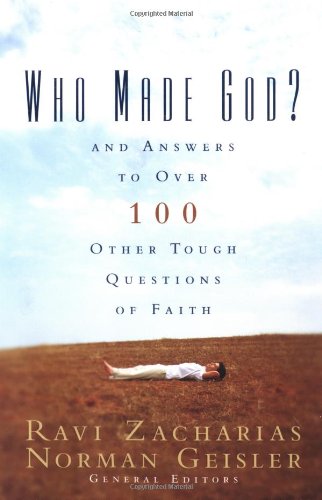 Who Made God?: And answers to over 100 other tough question of faith
Ravi Zacharias and Norman Geisler (eds)
101 answers for those tricky questions. Bite-sized and convenient these answers make this book a great resource to keep handy for those times when we are faced with a question that we don’t know the answer to.
We like to go back to this book for quick refreshers from time to time.
Buy this book on Amazon.co.uk
Useful Apologetics Resources: Websites
We love websites and online articles, and if you’re reading this, you might just like them too. For accessible starting-points for various tough questions, the world wide web is a great medium to host Christian Apologetics content.
Over the next three weeks we want to highlight three different sources of useful training that will help you grow in your own apologetics and evangelism. First up, websites.
So here are five (in no particular order) fantastic online resource centres.
The Poached Egg
What they say:

The Poached Egg is a large and continually expanding virtual library of articles and essays compiled from all over the World Wide Web. Noted apologists, biblical scholars, philosophers, scientists, historians, students, and laymen all come together under this one site.
What we say:
Greg West does an excellent job of finding articles from all over the web and bringing them under ‘one roof’. Frequently updated and with a good archive there’s plenty to learn from here.
Apologetics 315
What they say:
The vision of Apologetics 315 is to provide educational resources for the defense of the Christian faith, with the goal of strengthening the faith of believers and engaging the questions and challenges of other worldviews.
What we say:
Great website, jam-packed with quality content and links to further resources. Updated frequently. We love this site.
RZIM (EU)
 What they say:
Ravi Zacharias International Ministries (RZIM) exists to reach those who have objections and questions about the Christian faith, and seeks to challenge those who shape the ideas of our culture with the credibility of the Gospel of Jesus Christ.
What we say:
The RZIM Europe team are frequently speaking, writing, and debating all over the world. They run a world-class training centre within the University of Oxford (more on that later) and much of the content they produce is linked to online, from talks to articles to Q&A sessions.
Reasonable Faith
 What they say:
Reasonable Faith aims to provide in the public arena an intelligent, articulate, and uncompromising yet gracious Christian perspective on the most important issues concerning the truth of the Christian faith today.
What we say:
William Lane Craig is one of the foremost Christian philosophers of his time. His contribution to the area of Apologetics is huge. Craig often defends the faith in robust intellectual environments and is asked to speak all over the world in prestigious universities. However, it’s Craig’s desire that the church may be better equipped to answer objections that has led to him producing many great resources for the ‘guy in the pew’. Lots of great material here.
BeThinking
 What they say:
bethinking.org aims to bring together the best possible resources for thinking about and communicating the Christian faith. Its goal is to help to prepare all Christians to provide an answer to those who deny the truth of Christianity.
What we say:
A really clear introduction into some of the big subjects within Christian Apologetics. Broken down into ‘Introductory’ ‘Intermediate’ and ‘Advanced’ sections, there’s lots to learn about here and at whatever level you’re looking for.
The Unbelievable? Podcast (ht Trevor)
 What they say:
So you want to find a discussion on Islam? Science? The Bible? Explore the vast and growing archive of “Unbelievable?” debate programmes in this thematic index. Click on one of the four categories above – ‘Christianity’, ‘Cults and New Age’, ‘World Religions’ or ‘Atheism’.
What we say:
Justin Brierley does an excellent job with his weekly podcast attracting the leading intellectuals of our time to discuss Christianity. Lots of big names and lots of interesting debates. A rich archive, both audio and video, gives you a great taste of what is offered. Tune in on Saturdays at 2pm and subscribe to the feed. You wont want to miss an episode.
Reasons To Believe (ht Jiminy)
What they say:
RTB’s mission is to spread the Christian Gospel by demonstrating that sound reason and scientific research—including the very latest discoveries—consistently support, rather than erode, confidence in the truth of the Bible and faith in the personal, transcendent God revealed in both Scripture and nature.
What we say:
Astronomer Hugh Ross and the Reasons To Believe team do a great job of presenting the arguments surrounding the interplay of faith and science. A great website with plenty of resources from across the field of science – if you have questions from science about faith in God, start your search for answers here.
Have We Missed Something?
Let us know if you have a favourite online Christian Apologetics resource hub and we can add it to the list. Leave a comment below.
Next week: Useful Apologetics Books
You simply cannot argue anyone into the Kingdom of God, can you?
We are a confusing country to many looking on from the outside. Our football pitches are measured in yards and our rugby fields in metres. We take our beer in pints and our petrol in litres. (Yet we measure vehicle efficiency in miles per (Imperial) gallon – what?!). It rather threatens to make a mockery of the ‘united’ part of the UK, doesn’t it?
Yes, it’s confusing all right.
Equally, within the church in Britain there is confusion in how we should go about evangelism.
I Don’t Want An Argument
“You can’t argue someone into the Kingdom of God,” says Jim at pastorate to Bill, arguing that argument is not a valid method by which to bring someone to believe.
Bill is stumped by this. He has been at his local with his mates a couple of times in the last few months and on occasion the topic of conversation had turned to his faith. His friends’ curiosity, thinly veiled behind their cheap mockery, has led them to question Bill about why he’s a Christian.
Bill has gone home from these times at the pub thinking about what he can say. “Why did I become a Christian?” he asks himself, hoping to uncover some little gem of brilliance he’s temporarily forgotten with which to respond to his mates.
“If only I could find that one thing, the knockout punch, the explosive-statement. I’d throw out the pin, toss my hand grenade-of-a-thought into the middle of the group, and just walk away.”
A slight, wry smile crosses Bill’s face as he visualises the feeling he’d get from this. But the trouble is, Bill is stuck. He can’t find that grenade.
The Nature Of The Battle
I wonder if you can relate to Bill?
The Demolition Squad is called the Demolition Squad for two reasons. Firstly, army demolition experts – “sappers” – in WWII were cool (see ‘The Guns of Navarone’ and every other war film of daring courage). Secondly, we believe that there are good reasons to believe in Jesus, and that these good reasons can have an explosive effect in bringing down arguments that obstruct someone’s view of Jesus.
But to answer Jim’s question, ‘Can you argue someone into the Kingdom of God?’ – of course you can’t. The Holy Spirit brings a person to repentance.
You cannot argue someone into the Kingdom of God because argument starts with an arguer, that is, a person. Imperfect little old me will never, ever be a strong enough foundation to support a perfect conclusion: God.
The Bible talks of reality in the language of two kingdoms: a kingdom of darkness and a kingdom of light. These two spiritual kingdoms are at war and we are in the middle of the battle.
How do we know this? God told us. In fact, that’s how we know anything. How do we know about truth, right and wrong, the afterlife etc.? God revealed it to us.
This revelation comes to us in a few ways, but ultimately the greatest revelation is that God himself came to us in the person of Jesus. It’s rather blatant if you think about it. God, in order to get us to know, came and told us.
We know God because God revealed Himself to us. We know He wants others to know what we know because he told us that very thing. [1 Timothy 2:4]
The starting point of everything – including all knowledge – is God. As the Bible says, “The fear of the Lord is beginning of knowledge.” [Proverbs 1:7]
C.S. Lewis puts it brilliantly.
“I believe in Christianity as I believe that the sun his risen: not only because I see it, but by it I see everything else.”
The Strategy
The important thing for Bill to remember, and every Christian going about the work of an evangelist, is that our fight is not “against flesh and blood” – we are in a spiritual battle. [Ephesians 6:12]
Because the starting point of everything is God our strategy is to ask people to repent. We show our conduct before others, and our love towards our brothers and sisters in Christ, and use our arguments against false knowledge, in order to make Jesus visible. We present Jesus to people and then we ask them to repent.
We cannot know anything apart from God and we cannot know God apart from repentance.
Our arguments are weapons that we deploy in our God-given arsenal to shatter the deceptive ploys of the enemy. The arguments don’t win the war; Jesus wins the war. Quite simply, our arguments help people to see the victory.
The next time you’re at your local, and your friend asks you about your faith, smile, pray, and enjoy the beginning of the great task of helping introduce your friend to the Saviour of world. Relax. Victory is not something to be won at the pub, but something to be shared.
Oh, and come back here from time to time to pick up few hand grenades to help you along the way.
The Heart of the Matter: The Resurrection
The Easter weekend is massive. It represents the crux of the Christian faith. It is a request to us to hit pause on our lives. Where we spend most of our time gazing forwards, Easter turns our vision back to the single focal point of history.
A couple of millenia ago, on a hill outside of Jerusalem, three men were nailed to rough, wooden crosses. Those three men died horrendously agonising – excruciating – deaths. But the man in the middle didn’t stay dead for long.
Now you can have Buddhism without Buddha, you could have Islam without Mohammed. But you can’t have Christianity without Christ.
And you can’t have Christ without the crucifixion and the resurrection.
Laws and rules and paths and journeys – they don’t hang on one person. Anyone could come up with them. But Christianity is different. It is a faith in a living person who died and rose again.
Quite simply, it all hangs on Jesus.
The Apostle Paul says, “if Christ has not been raised, your faith is worthless.” There it is. The heart of the matter. No resurrection; no faith.
If we could show from the historical record that Jesus didn’t exist, or that he didn’t die, or that he didn’t rise again, we have no faith.
If we can prove that dead people always stay dead and resurrection is totally impossible, we have no faith.
Tim Keller sums things up this way:
“If Jesus rose from the dead, then you have to accept all that he said; if he didn’t rise from the dead, then why worry about any of what he said? The issue on which everything hangs is not whether or not you like his teaching but whether or not he rose from the dead.”
Defeat into Victory
There’s a great line from Chuck Palahniuk in his popular book (turned-into-movie) Fight Club: “Only after disaster can we be resurrected.”
Oh how true this is. We’ve had the disaster; Christ has the resurrection.
The Bible describes this world perfectly. Created for life, with promise and hope, we now struggle in a broken system.
We fell out of relationship with God when we proudly thought we could go it alone, do it our way. Our rebellion came at a cost though and the price was more than we could pay. So God himself came to earth as one of us, as Jesus, to not only show us the way but be the very way back into relationship with our creator.
By dying a death he did not deserve he paid the price we could not pay. The cross – that awful Roman torture device – has become a symbol of cosmic love offered to this world.
And then he came back to life.
Death touches everything and steals from whatever it can. We had no answer to it, only remedies to distract us from it. But like administering Calpol for a broken leg, our efforts made no headway against our greatest adversary.
Christ’s resurrection from the grave shattered death’s hold on us and this world.
This Easter, pause a little. Linger over this event in history which changed the course of this world. Be resurrected out of disaster into new life. The victory belongs to Jesus and he offers it to all of us today.
photo from FreeFoto
It's In The Details
In a recent Demolition Squad article we saw how well established Jesus is in the historical record. History indeed shows Jesus as a man whose life and death had a huge impact on the communities, governments, and religions around him. So what was it about Jesus that produced these momentous tremors on the historical seismograph? The answers can be found in the four accounts of the life of Jesus: the gospels.
Now the four gospels of the New Testament claim to be based on eyewitness accounts of the life of Jesus. The thing is, as far as historians can tell, none of the four gospels were written in the location they were set in. Countries like Syria (Matthew) and Egypt (Mark) are thought likely locations for the origin of these texts, so also is the Greek city of Ephesus (John). The Gospel of Luke may well have been written in Rome or Antioch and yet in the opening of his book Luke says that his writing is based on accounts, “handed down to us by those who from the first were eyewitnesses.”
Well it is all very nice claiming eyewitness testimony you might say, but isn’t it a far simpler explanation to conclude that actually the origins of these books show that these so-called accounts are fabricated stories, made up far away from where the events supposedly took place?
To begin to answer this objection we must first take into account the style of writing of the gospels. Scholars agree that the gospels are presented to us as straightforward historical account. That is, they are full of facts such as names of places and names of people etc. Tom Clancy may fill his novels to the brim with every last detail but historical fiction didn’t bother with such exactitude. It just wasn’t the way it was done. The story was much more important that than the finer points. However, historical account was very much concerned with the facts.
Well, of course, showing that the style was historical account in no ways shows that what we have is a faithful account. What is does show however is that the authors were presenting their accounts to their readers as history. In that age historians thought that history had to be written during the time when eyewitnesses of the historical events were still available to be cross-examined. Polybius – a 2nd C. BC Greek historian – said that the role of the historian was “to believe those worthy of belief and to be a good critic of the reports that reach him.” The obvious benefit of this is that names, dates, people involved etc. – these could all be corroborated or disputed by the eyewitnesses themselves. In this way, the gospels leave specifics to be examined.
In the film Ronin, there’s a great scene the where CIA agent Sam, played by Robert De Niro, confronts Spence (Sean Bean) who claimed to be have been in the SAS. Spence is defending his tactics and Sam isn’t buying it so he pushes him on his story. “What’s the colour of the boathouse at Hereford?”, he demands. Spence falters, his story crumbling as a detail that would have been known to him if he had ever been around the SAS training base caught him out. Spence wasn’t in Hereford, he didn’t train with the SAS, he didn’t know the details.
Richard Bauckham published a book in 2006 called Jesus and the Eyewitnesses. One brilliant piece of research highlighted in this book looks at the difference between Jewish names in Palestine in the 1st Century, and Jewish names in Egypt in the 1st Century. The popular names were different for the two countries despite common culture and language. An author writing in 1st Century Egypt, who had no knowledge of Palestine, would simply not know this information. Yet, when we read the Biblical accounts we see two things. Firstly, the frequency of the names used throughout the Gospels correlates extremely well to the names recorded by wider history from Palestine at that time.
Secondly, and quite incredibly, the popular names are well qualified. Let me explain. In my GCSE maths class there were four Jonathans in the room, and we all sat next to each other on purpose. To our 16-year old minds it was hilarious when our teacher would shout “Jonathan!” and we would all simultaneously express complete innocence. But it didn’t work when our surnames were snarled at us from the front.
Similarly, when we see a popular name mentioned, like Simon (most popular in Palestine at the time) we see a qualifier e.g. Simon Peter or Simon the Zealot. That is how a guy called Simon would have been known to his friends, because there were many Simons around. But someone with a less popular name wouldn’t need a qualifier, and indeed, the gospels show this too.
The fact is that the gospels are full of precise details that scholars have since verified as authentic. We see place names, distances, and the names of people involved all matching up. The four gospels were presented and accepted in the 1st Century as true historical accounts. 2000 years on after much research our studies still continue to show how incredibly trustworthy these documents are. The evidence has been shown to be sound and now it is up to each of us to decide if we will accept Jesus for who he, and history, says he is.
