Author Archives: Jonathan Sherwin
Arguing from the Evidence: The Moral Argument

I recently started watching Homeland. I think it was the combination of Damian Lewis donning US military uniform again as well as the nominations for all those awards that had me curious. I don’t know what I was expecting, but it wasn’t what I found myself watching. Homeland is brutal. Sure, there’s the violence and the sex etc. but it was the uncertainty of the plot that was most assaulting. I wasn’t sure who to cheer for. However, I kept watching, certain that at any moment Captain Winters would emerge and save the day.
Stories surrounding conflicts – be it Band of Brothers or Homeland – are gripping because they are stories of struggle. If truth, hope, and beauty are lights that guide us then in wartime those things can become awfully dim. How people struggle to find that light through the chaos is the stuff of inspiration to authors and screenwriters.
War for those involved in them is not a thought experiment but rather a brutal testing ground of all that you believe and hold to be true. Perhaps this is why those that cling on to hope through turmoil provide us with some of the greatest film plots.
But you don’t need to have been to war to know the struggle for the good is within us. Even in the day-to-day rhythm of life we can ask ourselves what the purpose of our existence is. War may present these questions both suddenly and acutely but equally the monotony of life can provoke an unshakeable longing to simply ask ‘why?’
When we watch the stories of triumph over despair on our screens we watch them actively looking for resolution. We want the hero to win, to overcome the odds, to persevere at all costs. Be it Batman, or Oskar Schindler, or Andy Dufresne – we long for the good to defeat the bad. There is something within us that agrees that it is right and noble to seek and strive for the good of a cause, a person, or an ideal.
That we all believe in a concept of goodness points us to a greater reality. The desire to cheer for a winner, the good side, makes perfect sense if there is, ultimately a good side.
Without belief in God it’s still a worthwhile thing to strive for the good and lament the wrong but the advantage the person of faith has is that this all makes sense to him.
Without God we can cheer for a winner but how can we ever be sure we’re cheering for the right side? If there is no standard, no ultimate right and wrong, then is there really any such thing as a right side at all or is our belief in goodness just a construct or perhaps based only on group consensus? Here’s hoping you’re in the right group – and the strongest and largest group – if that’s the case, because history points out that there the majority often get their way.
The moral tensions teased out on our screens taps into a deep desire in all of us, a desire based on an understanding of some kind of moral code, an order. That these things resonate so strongly with us suggest that we are wired in such a way to know right from wrong, which in turn points to a standard beyond ourselves and our cultures.
Faith in God provides a grounding point that makes sense of this world as we experience it. The moral clues in all of us serve as a pointer to the true nature of reality. With morality secured, there is hope that the winning side may be found and known.
Now, if only I could work out who is on that winning side in Homeland. But that will have to wait for another season or two I fear.
Ethos: We Shouldn't Care
Ethos – part of Youth for Christ have released a new video looking at the question of morality.
This – part II – was written by Andy of the Demolition Squad. Take a look and tell us what you think!
And if you missed part I have a look here: Can We Prove The Existence of God?.
Ethos: Can We Prove The Existence of God?
Ethos – part of Youth for Christ have released a new video asking the question: “Can we prove the existence of God?”
Written by Andy of the Demolition Squad the video begins to look at some of the good reasons that we have for the existence of God.
Take a look and tell us what you think!
The Demolition Squad in 2014

Back in October of 2012 a meeting was held in The Hub to talk about how CVM could equip and resource men across the country and further afield with resources to help them share their faith. The Demolition Squad was born that day. Tasked with the objective of providing good answers to tough questions we set to work writing, teaching, and training.
2013 saw the blog take off, the podcasts launched, and the training beginning through various events including the national CVM training weekend, The Gathering.
[Log in to My CVM to view the video]
In 2014 we’re heading from strength to strength. There are fresh projects and new content in the pipeline and we’re excited to share that with you! But first, we wanted to recap on last year.
Top Blogs of 2013
In 2013 we put our heads down and started to write articles and blogs on the challenging questions Christians face when sharing their faith. Coupled with this, we wanted to highlight existing useful tools and resources to help you in your evangelism.
We had lots of fun the blog and we hope you found them useful. We loved all the comments – even if we couldn’t respond to everyone! – we value the interactions they provide and the conversations that they spark.
It’s hard to pick any blogs to single out, but here are five of our more popular blogs from last year:
- Seven of the best online apologetics resources
- The Stephen Fry syndrome
- Look Around You (Exploring how Atheism and Christianity account for what really matters)
- Beer Mat Apologetics: Five Principles of Sharing our Faith
- Arguing from the Evidence: The Cosmological Argument
The Blog in 2014
In 2014 we will be finishing up the ‘Arguing from the Evidence’ series with an article on the Moral Argument. Following that we have a new series, some book reviews, and some fresh media.
We value all of your input in the comments and emails that we get. Your thoughts have helped us to shape our content. We would love this to continue. Do you have an idea for us? Is there a tough question you’ve been thinking about? Drop us a line in the comments below with your suggestions for 2014. We read every one and will take your ideas on board.
Coming Up: Quickfire Training Day – 8th February

The Demolition Squad will be deploying to the CVM ‘Quickfire’ Training Day on the 8th February. Squeezing the best bits out of some top thought leaders this day will equip, inspire, and encourage you.
Come along and benefit from a full day of training from experts in evangelism to men.
You can book in online here.
We want to thank you all for your engagement in 2013. We’re excited about what this year holds, the wider goals of CVM, and the general mission of seeing men introduced to Jesus!
D.S.G.
Calling Our Bluff
For Rob Ford, the mayor of Toronto, Canada, things were pretty good. He was getting away with it. But when the revelations of character flaws appeared through a few films on YouTube it didn’t take long for the accusations of ‘unfit for office’ to be heard. I’m sure it could have been worse. Make no mistake, it will become harder and harder for a person to hold public office with hidden secrets when so much of our lives are being digitally recorded.
Of course we all hide things. Things we don’t like. Things that we have done and we regret or insecurities that we hold. For some of us, our greatest fear is being found out. And to protect ourselves we develop a self-righteous, stoic resolve and we reject enquiry. We don’t point fingers, because we don’t want any to be pointing back at us. As The Killers put it in the track Sam’s Town, ‘I’m sick of all my judges, so scared of what they’ll find.’
For the last 2,000 years or so Christianity has found homes in the overwhelming majority of cultures and civilisations. Spanning across race, language, and location the message of a man from Galilee has touched billions of people. And in one sense, this is not surprising. Christianity properly describes the ‘human condition’. It’s not a culturally defined, human-created idea, but the truth. And that truth rests on this fact:
We’re all bluffing.
Way back at the beginning of the story we the see the Bible describe the temptation put before Adam and Eve. ‘You will be like God (Genesis 3:5).’ The lie is: we, on our own, can be God. We can be arbiter and judge. We can decide what’s right and wrong. We can live our own lives well under our own power just fine.
History shows us the same story again and again. It is the story of people trying to live life under their own steam, and failing
If a friend of yours has a drinking problem, or is cheating on his wife, do you leave him in his error? On the surface he may seem fine, the thin veneer of normalcy and civility stretched over a framework of lies and shame. But when you learn of his problem, as a friend, you step in.
In the same way, whilst we struggle trying to make it within our own strength, God, who we originally rebelled against, and continue to rebel against, is the one who lovingly points out our weakness.
Enter Jesus. God himself, in the form of a man, came to earth to call our bluff. His first teaching starts with, ‘Blessed are the poor in spirit (Matthew 5:3).’ In other words, the ones who realise that they don’t have what it takes – blessed are they. Jesus came that we might know that we’re bluffing. For some of us, yeah, we know we’re holding nothing, but others of us may not realise this yet. Maybe we’ve never realised this fact or maybe we’ve been kidding ourselves for so long that we actually believe we have pocket aces when really we actually have nothing at all.
Go ahead, take a look at your cards. Socrates said, ‘the unexamined life is not worth living.’ It is so incredibly easy today to add distraction upon distraction so that we never truly examine our life. Ask the big questions. Ask why the world is the way it is, why people are the way they are, what hope there is that may be found. Jesus was fond of questions – he asked them of many people. Enquire of yourself and then enquire of the world and look around for the answers.
I don’t know about Mayor Ford but sometimes when people are found out, though there are consequences to their actions, they are flooded with a deep sense of relief. They are relieved from the burden of having to live that lie any longer.
Jesus Christ offers explanation for the deep problems that we face. But he goes one step further than that; Jesus offers a solution and a real hope. To all who see him, accept him, and trust in him he grants to them deep peace and he offers them complete forgiveness. There’s no greater sense of relief on offer from any other source. Don’t bluff your way through life; the stakes are just too high. Be real with yourself and get real with God.
Arguing from the Evidence: The Fine-Tuning Argument

The Universe that we live in is special. In fact, it is very, very special. Scientists are in awe of just how special this Universe appears to be. The apparent fine-tuning, or precise calibration, that we see in the Universe is quite simply amazing.
For the Christian, this all makes sense. For the non-believer this poses a problem. This, the second part in our ‘Arguing from the Evidence’ series, is the Fine-Tuning Argument.
Dialled In
Sir Martin Rees, our top Astronomer, wrote the book on the science behind this wonder. Just Six Numbers shows how our basic physical constants need to be dialled in to precisely the right setting for life to have come to exist after the Big Bang. A slight variation from this, and there would be nothing.
And the variation needed for change is slight indeed. Let’s take gravity for instance. Robin Collins tells us that if we change gravity by “one part in ten thousand billion, billion, billion” there would be “no humanly populated world”.
There is no ‘safe zone’, no happy band for which these settings can exist. They’re either right or they’re wrong, and there are billions and billions of other settings that are ‘wrong’.
The dial is set, and is set well for life. Either this is pure cosmic accident, chance, or something set the dial that way.
But when you look deeper into this, as scientists do, it gets harder and harder to believe that is luck. The odds just don’t stack up.
Sir Fred Hoyle, himself an atheist, honestly concludes that, “a common sense interpretation of the facts suggest that super intellect has monkeyed with physics … and that there are no blind forces worth speaking about in nature.”[1]
Alister McGrath sums up the findings of evidence this way:
“The phenomenon of fine-tuning is widely conceded; all debates concern its interpretation.”[2]
So What?
As you read this perhaps you are thinking to yourself, “so what?” “I’m here, we’re here – does it really matter what the odds were? Even if the odds are strongly against this outcome – like the odds of an English fight-back in The Ashes – still, it could happen.”
Well, let me use an illustration at this point. You’re playing poker. You’re playing poker with your friends, after a couple of beers, the same thing you do every Sunday night. One night, one of your friends turns a Royal Flush in one hand.
Now you’re quite the poker guru. You fancy that if you were made unemployed it would be no big deal. You would be on the Pro-Poker circuit making much more money and having much more fun within days. So you know that the odds of your friend having those cards is 0.000154%.
But maybe it’s his lucky day, you surmise. But then he gets those cards again, and again, and again.
Common sense screams so loudly into each players mind that something is not right. This just can’t happen.
Sure, it could – but what are the odds! In the same way, the odds of the Universe arriving in this condition are so low that we should think twice about what this means.
What if …
Not everyone is led to believe in a divine intellect from the analysis of the data. Martin Rees himself, acknowledging the incredible facts, is not led to believe in God.
One theory, and one that Rees goes for, is that there are many universes, and we live in just one of them. If there are many universes – or perhaps an infinite number – then the odds are greater for life on one or many, or further still, expected.
Of course, actual infinities are tricky (something we looked at with the Kalam Cosmological Argument). Furthermore, even if we indulged in speculation on the idea of many Universes why should this one have the right conditions for life? It’s still a huge stroke of good fortune.
Following the Evidence
The noted philosopher Anthony Flew was led to change his mind, and back down from his strident atheism, in part due to the weight of the Fine-Tuning argument.
This remarkable, finely-tuned world that we live in prompts us to ask ‘Why?’ The data invites us to lay aside our preconceptions, our prejudices, our presuppositions, and consider the facts as neutrally as possible. When we do that, the case for a God takes on new weight, and far from being an intellectual cop-out, becomes a position of intellectual honesty.
Alvin Plantinga, one of the world’s leading philosophers, concludes that the evidence shown by the Fine-Tuning Argument ultimately makes more sense for Christians than for atheists:
“Given theism, fine-tuning is not at all improbable; given atheism it is; therefore theism is to be preferred to atheism.”[3]
The question now becomes, where will you let the data take you?
Arguing from the Evidence: The Cosmological Argument

Can we know anything about God outside of the Bible or the historical record? That’s what we’re looking into with this mini-series. What does the information we know about the Universe tell us? Where does the evidence lead?
In this first of three classical arguments for the existence of God we want to suggest that there are good reasons to believe in the existence of God, and that these arguments begin to get some way to describing what that God is like.
In the beginning …
Not so long ago it was popular to believe that the universe simply always existed. Carl Sagan famously stated that,
“The Cosmos is all that is, or ever was, or ever will be.”
But then along came a chap by the name of Georges Lemaître – working with ideas from one Albert Einstein – who said that actually, it looks like the scientific evidence points towards a starting point. We now commonly refer to this point in history as ‘The Big Bang’.
Science – and our experience – points to the fact that the Universe began to exist, and this is where we jump into our argument for the existence of God with one version of the cosmological argument, ‘The Kalam Cosmological Argument’.
1st Point: Whatever begins to exist has a cause
Think of something, anything. Anything at all. Now think about how that ‘thing’ got there. In your mind or in reality, we instinctively know that things do not just pop into existence out of nothing.
My credit card bill is proof of this. It didn’t just get appear out of nowhere, it is very the result of a cause (rightly or wrongly, but that’s a different argument). Likewise, the means to pay my bill won’t just spontaneously appear out of thin air, no matter how hard I wish. Things that begin to exist have a cause.
2nd Point: The Universe has a beginning
Cue Einstein and friends with their scientific research. Science, as the exploration of what is, is of great help to us with this point. Established scientific theories today, such as the redshifts found by Hubble (the man, not the telescope), point towards a beginning for the universe. This is very much in agreement – not opposition – with faith.
(By the way, if you’re interested, we’ve looked at Science vs. Faith in two previous articles: ‘Hasn’t Science Disproved God?’ and ‘Religion vs. Science’)
Additionally, we can take this second point to be true outside of science by employing a bit of logic.
If the Universe has always existed and did not have a beginning then the history of the universe would be infinite. Sounds good, but as none of us possess the talents of Mr Buzz Lightyear, it’s impossible for us to traverse an actual infinite.
Let my try to explain. Mr Chris Evans, of current BBC Radio 2 radio fame, is known for his large collection of Ferraris, all painted that classic Ferrari colour, white. Imagine that one morning Chris wakes up and finds that his collection has expanded and now he possesses an infinite number of Ferraris (for some of us, believing in owning one Ferrari as akin to believing in owning an infinite number of those beautiful machines).
Chris is happy and as he muses over this increase in his collection he decides to break his own rules and paint every other car in his (infinitely long) garage, oh, I don’t know, red. Chris now has one red Ferrari sitting next to a white Ferrari and on and on …
Some time (in the not-too-distant future, perhaps), the BBC is faced with budget cuts, Chris has to take a pay-cut and decides to self off half of his beloved collection. The red cars must go. So Chris sells all of his red Ferraris and is left with just the white. But how many cars is Chris left with? He had an infinite amount of cars and removed half of them. What is half of infinity? It’s not a number, like 6, because that could be doubled to produce another number, which would not be infinity. Chris still has an infinite amount of white cars. So what happened with those red ones? What exactly did Chris lose?
The reality is, actual infinite series of anything just don’t exist. In this way, logically, the universe cannot have existed for ever and had an infinite series of past events leading to the present moment.
3rd Point: The Universe therefore has a cause
So we have shown the universe to have a beginning, and in point one we showed that all things that have a beginning have a cause. Great. Let’s think about the nature of this cause …
The cause of the existence of the Universe must have been very powerful (to create the Universe from nothing), outside of time (the cause created time as well), as well as existing infinitely. We’re not quite yet at Jesus of Nazareth but you can definitely see a strong shape of a higher power coming into focus.
What’s more, this first cause, as well as having amazing attributes, must also be in some way personal because it chose to create the universe. An eternal, extremely-powerful thing doesn’t have to do anything. Nothing can compel something that large to do anything, in much the same say that I can’t force Martin Johnson to smile – or do anything for that matter – unless he wants to do it himself (ps – thank you for 10 years ago, today).
Let there be light
As we’ve noted before, Blaise Pascal said that, ‘there is enough light for those who only desire to see …’ The Kalam Cosmological Argument doesn’t reveal a specific deity nor point to only one religion, but what it does do is turn on a light.
Over the next two weeks we’ll add a couple of further arguments to this one, building a cumulative case for the existence of God, outside of Scripture and the historical record. As these lights turn on, take a look, see what they reveal. Perhaps they will lend themselves as starting points on a journey. We hope that you will discover that there are good signs within this universe that point to the existence of the divine, outside of space and time, incredibly large, complex, and powerful, who we call, God.
The Kalam Cosmological Argument from Reasonable Faith
The Christian philosopher William Lane Craig has done much work on the Kalam Cosmological Argument. He has written about it in several places and his team at Reasonable Faith have put together this great little video on the argument:
Arguing from the Evidence
“For what can be known about God is plain to them, because God has shown it to them. For his invisible attributes, namely, his eternal power and divine nature, have been clearly perceived, ever since the creation of the world, in the things that have been made. So they are without excuse.”
(Romans 1:19–20, ESV)
Outside of Scripture and History, are there any pointers, evidences, good arguments for the existence of God?
This question has been asked often over the last few centuries and the answer that comes back is: yes.
If the Universe is, as Christians believe it is, a creation of an all-powerful, all-loving, all-knowing God, then there should be some evidences of himself in the make up of the Universe.
This is, in part, what the Apostle Paul is getting at in his letter to the church in Rome (above). We are all “without excuse”. There is not going to be anyone who has a sit-down interview with St. Peter, or whoever guards the gates of Heaven, and says ‘I didn’t have enough evidence to persuade me’ and then hears Peter say, ‘Oh, very well then. Sorry about that, come on in.’
It wont do for Richard Dawkins to paraphrase Bertrand Russell and offer this thought to God in defence of his unbelief were he ever to meet him one day, ‘Sir, why did you take such pains to hide yourself?’[1]
That being said, the evidence we are presented with is not overwhelming. It does not foist itself upon us. The evidence does not wrestle with our unbelief and crush our wills. Andy wrote about this a little while back (‘Prove It To Me’ – Oct 2012).
No, we are created free agents with free minds and the ability to choose. As Blaise Pascal said,
‘There is enough light for those who only desire to see, and enough obscurity for those who have a contrary disposition.’[2]
Road Map
Over the next three weeks we shall be exploring three arguments for the existence of God that we can appeal to outside of the Bible. These are:
- An argument from the existence of the Universe
- An argument from the appearance of design within the Universe
- An argument from the existence of morality
Taken cumulatively, these arguments combine to offer good reasons to believe in the existence of God, and go some way to talking about his nature too.
For now, take a look at this video where Professor John Lennox (University of Oxford) presents his case for Christianity, starting with the evidence found within the natural world.
Abraham and Isaac
The Bible is perhaps the most-quoted book in circulation today. Verses crop up in government, on University mottos, and across many social events including baptisms, weddings, and funerals.
Aside from spurious quotations in Quentin Tarantino films (*) nearly all of what we snip out of this small library of books consists of nice, positive, heart-warming, soul-stirring platitudes.
But then we pick up a Bible and we read it and we realise there is more, much more, than may have appeared to us on first glance.
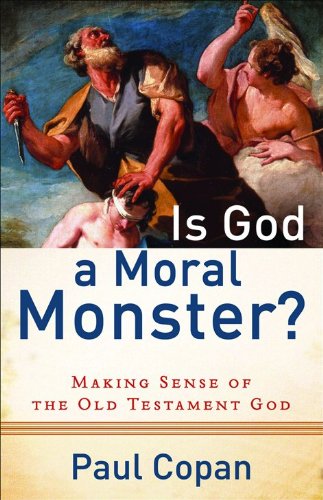
Take for example the story of Abraham and Isaac in the Old Testament. Now what on earth was going on there?! Abraham, chosen by God to be the father of a nation, takes his only son, Isaac, through which apparently that promise from God was to be fulfilled, and offers him to God as a sacrifice. Abraham was to kill his only son.
In The Bible through the eyes of an atheist Tom instinctively and correctly wants to know ‘why God would even think …’ about asking Abraham to kill his son, Isaac. In fact, much of the Bible elicits a ‘Why, God?’ response from its readers. Our cursory looks lead us to investigate the stories further and we are challenged to suspend judgement until we add context and place the challenging scriptures within the overall framework of the whole of Scripture. After all, the Bible is a unified document and needs to be taken as a complete work.
Backing up a bit, God speaks to Abraham in Genesis 12:2-3, with a promise of blessing.
“And I will make of you a great nation, and I will bless you and make your name great, so that you will be a blessing. I will bless those who bless you, and him who dishonors you I will curse, and in you all the families of the earth shall be blessed.”” (ESV)
God was going to bless the world, through the family of Abraham. We then skip to 22:2 and we read that God told Abraham to take his only son, Isaac, and, “offer him … as a burnt offering.
At this point Paul Copan in his book Is God A Moral Monster is very useful. He makes four points from the text, which I’ll summarise here:
- 1. The reader is informed straight away that this is a “test” for Abraham. God’s plan isn’t for Isaac to be killed.
- 2. When God requests of Abraham that Isaac be sacrificed his request is polite. “I beg of you” belies the gentleness of God at this point.
- 3. God knows full well what he’s asking. In v. 2 we read, “Take your son, your only son Isaac, whom you love …” Even in the request God is reminding Abraham of the promise he made to him in chapter 12. God hasn’t changed his mind, done a U-turn, or reneged on his word. God’s faithfulness – an overriding attribute that is demonstrated throughout Abraham’s life – is shown.
- 4. The place where Abraham is to take Isaac is named ‘Moriah’. This name speaks of ‘provision’. David Wenham is quoted by Copan in this, saying: “Salvation is promised in the very decree that sounds like annihilation.”
The story of Abraham is a story of a man who trusts God and obeys him. God led Abraham from his land, by his guidance, and through Abraham’s trust a nation was birthed and blessed. Abraham was, and remains, a story of faith in the character of God.
Furthermore, in the account of the offering of Isaac, we even see Abraham acknowledge before the sacrifice was to take place, that both he and Isaac were to return (22:5). Abraham knew God and knew the promise that was given to him. In trust he obeyed.
Isaac and Jesus
The parallels between Isaac and Jesus are strong and recurring. The Apostle Paul references Abraham repeatedly when talking about the life of faith (Romans 4). Additionally, the language of God sending his only son mirrors closely the language used of Abraham and Isaac. Not to mention that the sacrifice God used in place of Isaac was a Ram (22:13), another parallel to Jesus as the sacrificial lamb for our sins.
As Abraham trusted God and offered Isaac, Isaac trusted his father and willing went along. Jesus in the same was both sent by the Father, and came to earth to die of his own volition (See Why Did God Have To Die?).
The story of Abraham and Isaac sets a great theme of trust, faith, and salvation through God. It is central to the whole of the Bible and it is why Paul can call all people to trust in God, as provider, because He spared nothing but gave everything for us, as it is written:
“He who did not spare his own Son but gave him up for us all, how will he not also with him graciously give us all things?” (Romans 8:32, ESV)
(*) A little bit of Ezekiel (25:17) with a smidgen of embellishment, in Pulp Fiction
Reason Is Not King, Jesus Is
We love a good debate. I think perhaps many men can relate to this. The Athenians had their market squares and we have our pubs. Give a man a pint and a stool and he, for a while, may genuinely believe that he is an expert on any matter and it is his job as arbiter of the truth to pass on this wisdom to every and anyone.
We discuss, we argue, we implore, we reason, we chide, and we may or may not change our minds.
Of course, these moments of lucid genius may only exist for the briefest segments of measured time in the middle of an evening otherwise long forgotten. However, these methods of reasoned debate, whilst sometimes lost in the depths of an old pub, are the same methods that we employ to make our minds up on all manner of things.
Adverts on TV work this way. The idea, the allure, the sell – the goal of all these is to convince us to decide to buy a product, or a way of life, or both. What car we buy, where we live, what career path we take, we make our decisions with the facts, and the feelings, and all of the input. Make no mistake; we reason our way through life. How we reason and whether our processes are any good is, of course, another question.
We think (fairly or poorly), we feel (fairly or poorly), we employ logic (accurately or inaccurately) and we form our conclusions.
But, You Can’t Reason Someone Into The Kingdom
We have looked at this before and the answer is well, yes. Yes you can. Sort of. The Bible tells us to be ready to respond to those who are asking questions of us about our hope, our faith (1 Peter 3:15-16). Our reasons have a potential power to persuade. The words that we speak, and don’t speak, have power.
The Bible takes a high view of words. The book of Proverbs can’t stop talking about them. Jesus verbally taught his disciples through words. And God brought the entire existence of everything into being through words. Words are powerful.
The words we use as we give reasons also have power. They can inform thinking and change peoples minds.
Our words are powerful because they are useful and they are useful because God works with them in unlocking human hearts that they might see the person and work of Jesus, his sacrificial death and offer of forgiveness.
Keeping Focus
Practically speaking we know that our words have power. We have encouraged people and brought smiles to faces. Equally we have knocked people down with rash outbursts. We will have changed people’s minds on matters with good wisdom too. Perhaps even your words have been instrumental at key moments in friends’ lives. Perhaps even friends have come to know Jesus because of what you have said.
For the apologist, for the evangelist, words are used often. It’s a very easy step from trusting the source of the power – Jesus – to trusting in the instrument of our reasoning, our words.
Our words have power when speaking of Jesus because Jesus is real. If Jesus wasn’t real, didn’t live, doesn’t live then our words are meaningless. Our reasoning about something untrue becomes undone because it simply cannot hold up.
For the wordsmiths among us, the poets, the men on stools in pubs across the country, let’s remember that our words serve our king, King Jesus. We preach Christ and reason Christ and celebrate Christ. Our words communicate to others what has been communicated to our hearts by our saviour and friend.
Because Jesus has reached out to us, in our mess and in our confusion, we hold his truth as central, disturbing our natural inclinations that would seek to promote our reasoning and our words. Our minds and our tongues now serve a King more powerful than all the reason in the wide world. That should give us lots to talk about.
